
February 27, 2026
How to Read an HS Code: Understanding the 6-Digit Global Trade Classification
Why HS Codes Matter in Trade
HS codes appear on almost every shipping document, but many traders do not know how to read them. Each six-digit code carries vital information about your product. Reading it correctly can prevent incorrect duties, missed trade benefits, and customs delays.
This guide explains the HS code structure, layer by layer, with real-world examples so you can verify classifications confidently and avoid costly mistakes.
What Is the Harmonized System?
The Harmonized System (HS) was created by the World Customs Organization in 1988 to provide a standardized method for classifying traded goods. Today, over 200 countries use it, covering more than 98 percent of global merchandise trade.
HS codes organize products hierarchically, moving from broad categories to precise definitions, which is reflected in the six-digit code.
Breaking Down the Six-Digit HS Code
The international HS code is always six digits, divided into three levels: chapter, heading, and subheading.
1. Chapter (Digits 1 and 2)
The first two digits identify the chapter, a broad category of goods. There are 97 chapters in HS 2022.
Examples:
02: Meat and edible offal
39: Plastics
72: Iron and steel
84: Machinery and mechanical appliances
87: Vehicles
The chapter provides a high-level view of the product.
2. Heading (Digits 3 and 4)
The next two digits narrow the category to a specific product type.
Chapter 09 (Coffee, tea, spices):
0901: Coffee
0902: Tea
0904: Pepper
0910: Other spices
A four-digit combination of chapter and heading identifies a reasonably specific category.
3. Subheading (Digits 5 and 6)
The final two digits define the product precisely.
Example: Tea (0902)
090210: Green tea, unfermented, in packings not exceeding three kilograms
090220: Other green tea, unfermented
090230: Black or partly fermented tea, in packings not exceeding three kilograms
Subheadings reflect meaningful distinctions, including processing, packaging, composition, or end use.

A precise and analytical close-up of a Harmonized System Tariff Schedule, with a magnifying glass highlighting the classification for specific iron and steel products, set within a professional office environment.
National Extensions: Beyond Six Digits
Countries add extra digits to apply national duties and regulations.
EU: 8-digit Combined Nomenclature
US: 10-digit Harmonized Tariff Schedule (HTS)
UK, Canada, Australia, India: similar extensions
These digits determine duty rates, trade agreement preferences, and import controls. Always check the national tariff schedule for each export destination.
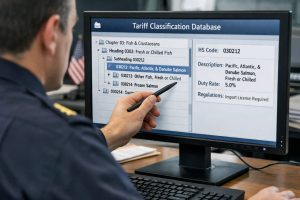
HS Code Example: Fresh Atlantic Salmon
Chapter 03: Fish and aquatic invertebrates
Heading 0302: Fresh or chilled fish excluding fillets
Subheading 030212: Pacific, Atlantic, or Danube salmon, fresh or chilled
HS 030212 is the six-digit base code. EU and US shipments add their national extensions, but the classification foundation remains the same.
Why Understanding the Structure Matters
Verify supplier codes
Search tariff databases faster
Discuss classifications confidently with brokers
Spot outdated codes before shipment
Misreading or misapplying HS codes can lead to wrong duty payments, missed trade benefits, customs delays, or audits.
Practical Steps for Accurate Classification
1. Start with the chapter by identifying what the product is made of or its primary function
2. Move to the heading, reading heading descriptions and legally binding notes carefully
3. Select the correct subheading by identifying distinguishing features such as processing, material, packaging, or use
4. Check national extensions for duties, quotas, or licensing requirements
5. Seek expert help by applying for an Advance Tariff Ruling if uncertain
Frequently Asked Questions
1. How many digits are in an HS code?
The international HS code is six digits. National extensions add 2 to 4 digits depending on the country. The US uses a ten-digit HTS code and the EU uses an eight-digit Combined Nomenclature code.
2. What do the first two digits indicate?
They identify the chapter, which is the broadest category of goods.
3. Can two products share the same six-digit code?
Yes. National extensions distinguish products under the same six-digit subheading.
4. How do I choose the right chapter?
Consider the product’s primary material or function. Follow the General Rules for Interpretation (GRIs) in the Harmonized System.
5. What are chapter notes?
Chapter notes are legally binding guidance that defines scope, clarifies included or excluded products, and sometimes overrides heading descriptions.
6. How often is the HS code updated?
The WCO updates the Harmonized System every five years. The most recent edition is HS 2022. Traders should verify that their codes reflect the current edition.
Written by the Editorial team at Ecoyeild